Trolls
The ChangelingTrolls are presented as beings of immense physical power whose danger can be met through concealment, cleverness, and the arrival of daylight. Their significance extends beyond an embedded folktale: Jorgen’s account of an ancestor who brought a monster to America connects the story’s creature to migration, family inheritance, and the choices people make about what they are willing to believe.
The Troll in the Embedded Tale
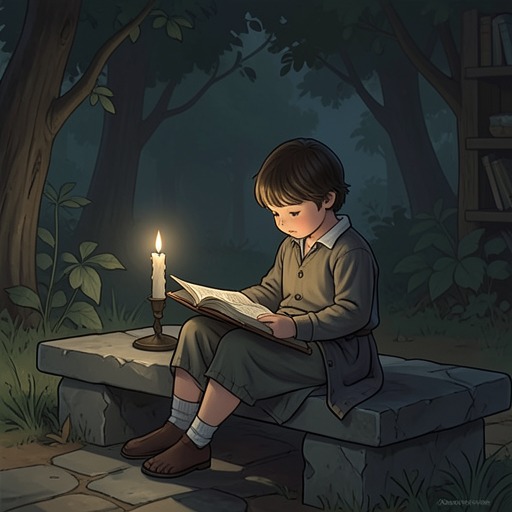
In the story of Askeladden, a troll approaches through the forest while the boy has nowhere to hide on the ground. He climbs a fir tree with the help of an ax used as a makeshift step. The tree’s leaking sap covers his hands and feet, concealing the human scent the troll would otherwise be able to follow. The episode establishes both the troll’s unusual ability to track people and the possibility that a small, practical circumstance can frustrate that ability.
The troll is described as six stories tall, with shoulders as wide as a bull. Its size makes the boy vulnerable even in the tree: when the troll bumps the trunk, Askeladden is nearly thrown from his hiding place. Yet the creature is not portrayed as perceptive. It notices that something is wrong and remembers that two other boys were recently in its woods, but Askeladden redirects its attention with a trick. The troll mistakes a stone for the boy, then accepts the boy’s claim that he is made of wood. Its strength is formidable; its judgment is not.
Pursuit and the Arrival of Daylight
Once the troll realizes that someone is present, it threatens to chop down the forest. It cuts through the surrounding trees until Askeladden’s fir is the last one standing. The long pursuit turns the forest into a measure of the troll’s determination and destructive reach, but also creates the conditions for its defeat: the chopping takes the entire night.
As the troll raises its ax against the final tree, morning arrives. Sunlight turns it to stone before it can reach Askeladden. The reversal depends not on the boy overpowering the creature, but on his survival lasting until the environment changes. After climbing down, he tries to push the stone troll over to retrieve his father’s ax and cannot move it. He then recognizes that the wood the troll has cut will make his father rich enough to replace the tool. The encounter thus ends with both the threat neutralized and the troll’s destruction transformed into a material benefit for the boy’s family.
A Monster Carried Across the Atlantic
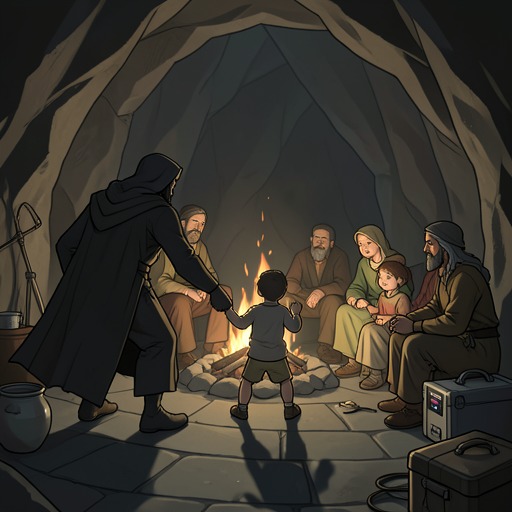
Jorgen gives the creature a history that reaches beyond the folktale. Speaking to Apollo about the Puritans’ stories of monsters in the wilderness, he proposes that the newcomers may themselves have brought monsters with them. He identifies his own great-great-great-grandfather as someone who brought a monster aboard a ship and emigrated to America. The account reverses the settlers’ familiar image of danger: the monster is not simply waiting in an unfamiliar land but arrives with the people who cross into it.
Jorgen connects that inherited history to Nils and the Sloopers. He says the other passengers trusted their crew and their God, while Nils put his faith in something older. He does not think the people on the ship knew about the monster. In his telling, ordinary passengers could make a safe crossing without understanding what had accompanied them. The family story therefore makes ignorance consequential: what people fail to recognize may still shape their lives and the history they pass on.
Human Responsibility and Inherited Knowledge
The troll’s association with the cave also sits beside a blunt account of human action. When Apollo asks about Agnes, Jorgen says that her father took her into the woods and left her in the cave. The exchange does not describe the troll carrying her there; instead, it identifies a human decision as part of the child’s abandonment. Placed alongside the family’s account of a monster brought across the ocean, this fact complicates any simple division between monstrous danger and human conduct.
The two accounts use different forms of explanation. In Askeladden’s tale, the troll is an openly supernatural adversary, defeated when sunlight changes its form. In Jorgen’s family history, the monster is woven into migration, ancestry, and the passengers’ incomplete knowledge. His final reflection is that choosing not to know the truth does not prevent it from changing people. The trolls consequently represent more than an external threat: they are also part of an inherited history whose effects persist whether or not those who inherit it can see its origins.